Reposted from: http://www.paloaltoonline.com/blogs/p/2015/02/22/college-touring-tips
Spring and summer breaks are wonderful times to visit college campuses. If you are planning college tours with your future college students, here are some tips to help make the visits successful.
Prior to visiting a campus, schedule an appointment. Most campuses offer tours twice a day. Weekend tours are very rare. Usually included in campus tours are an information session with a college admissions officer in which you can ask the hard questions such as admissions statistics, tips on what to include on the application, STEM programs for females and very specific questions regarding campus safety. Also by attending the information sessions, you will demonstrate to the office of admissions that a student is seriously interested in that campus. Colleges track these visits and it could make a difference in admissions. The student led tour of the campus gives prospective students an insider's look at life on campus – dorms, dining commons, classrooms, and the library, to name a few. Some campus tours are booked months in advance but you are always welcome to take a self-guided tour. The downside to self-guided tours is you don't get the admissions information session and you may not have the opportunity to see dorms or classrooms. However, it is easy to engage with college students hanging out on campus and ask them the questions about their experience.
Depending on the academic and social preferences of the tour guide and the prospective student, there might not be a connection. Try not to let the perception of the campus be influenced by the tour guide; it's only one person and one perception. The good news is with social media, prospective students can log on and chat virtually with current students and inquire about their majors or clubs and activities from campuses to get a flavor of the respective campus. Students who have a clear interest in a particular department can always get in touch with the chair of the department and schedule a conversation and perhaps even discuss with current students in the department.
When you ask tour guides why they chose their campus, you probably won't get an
entertaining response like these Yale students put together, but you will learn about how they made their decision.
Another consideration is WHEN you visit a campus. If it is during finals week, spring or winter break or on the weekend, the campus might not have the same "vibe" as it does when fully in session. I've visited large CSU campuses on weekends when there are literally only a handful of students walking around, not to mention that most of the buildings were closed. During the week, you are happily dodging pedestrians, bikes, and skateboards!
Did you know community colleges even offer campus tours? You can register online to take such a tour. For example, Foothill Community College offers tours that last about 45 minutes. They also offer self-guided tours. For more information, visit their website.
For students who do not have the time or financial means to visit every college on their prospective list, virtual tours are the next best thing. Two websites many of my former students have found helpful are College Week Live and Campus Tours. Many of the colleges will visit local high schools (inquire with your high school for more details) and NACAC offers a spring college fair in the Bay Area. These options allow students to demonstrate interest and meet admissions officers without having to travel to their respective college campus.
I would also recommend visiting colleges AFTER you have been admitted if your budget doesn't afford costly travel expenses. Keep the physical college tours for the short list. Some colleges will offer fly-in programs for low income students. Typically, the college covers housing and meals and the family covers travel expenses. Inquire at your colleges to learn more about this possibility and to determine if you are eligible to apply. Alternatively, visit local campuses that have similar personalities such as the campus size, the setting—city vs. suburbs, the same or equivalent academic programs, the opportunities for financial aid, etc. That way students at the very least can get a feel for what a campus with 6,000 students versus 35,000 looks like. The size of a campus and whether it is in a city or a small town are features that can be found in any state across the country. Even if local campuses are not an exact match, they will at least provide perspective.
Here are some questions commonly addressed during college tours and informational sessions:
Admissions Information Session
What are your graduation/retention rates?
How many students applied/accepted last year?
Parents should ask what the process is if their daughter/son is a victim of a sexual assault/physical assault/bullying by a fellow student, and also what safeguards are in place to protect the accused student from being unfairly treated.
Majors/Academics
Ask specific questions in the area(s) you are interested in.
What is the faculty to student classroom ratio?
Does the campus offer research programs for undergraduates?
Are the classes taught by professors or teaching assistants?
What is the average amount of time students study outside of the classroom?
What is the grading system like (curve, A-F, evaluation based, etc.)
If your campus is religiously affiliated, you will want to find out what those requirements are.
What career opportunities does this major offer and how successful have former students been in finding an agreeable, well-paying position?
Housing
If they can't show you a dorm, ask very specific questions.
How many students to a room?
Are there co-ed buildings or same sex floors?
Does the campus offer themed floors/dorms, etc.?
How many students live on campus and how many commute?
What are the housing requirements (some campuses require you to live on campus two years)?
Are freshman allowed to have cars on campus (this is a popular question)?
What does the college do if my roommate and I are not getting along?
Financial Aid (if this is applicable)
How many students receive Fin Aid?
What is the average Fin Aid package?
Are there merit-based scholarships?
Does the campus offer work-study jobs?
Will the Fin Aid office work with me on payment plans?
Campus culture
If there is a club/activity you are particularly interested in, ask questions
What is the campus culture like?
What type of clubs/organizations are offered?
What do students do on the weekends? Specifically if you are at a campus where students tend to go home, you want to make sure you have a built-in community; otherwise, you are on campus bored and alone on weekends.
What kind of activities are available off campus?
What types of Arts and Cultural events are offered on campus or in the surrounding community?
If your campus is religiously affiliated, you can clarify is attending a religious service (i.e., mass or chapel) is mandatory or optional.
Are there social and support programs available for first-generation students?
Greek Life
How many students participate in Greek life?
How many fraternities and sororities are offered on campus?
What is the time commitment to be involved in a fraternity or sorority?
What is the pledge process like?
Weather - this especially plays a critical factor in decision-making for students moving to a dramatically different climate.
Does the campus offer light therapy for students who suffer from depression?
How have students from (California, for example) adjusted to living in cold conditions (like New York or Boston)?
What policies does the campus have for snow days?
What if any policies are in place for "natural disaster" situations? (Basically, how prepared is the campus for this kind of situation?).
Dining
What is the food like? If you have a specific food requests (organic, locally sustained, vegan, gluten free, etc.) be sure there are enough options available to you.
What are the meal plans offered?
How many dining commons are provided on campus?
How are the dining establishments off campus?
Peer-to-Peer
Your tour guides are current students. Ask them where they are from, what their major is and how they decided to attend this college. You can also ask them where else they applied or which other colleges were they accepted to.
Campus Resources and Safety
What types of academic resources (counseling, tutoring, EOP/First Gen, etc.) are available to students?
What type of personal services (counseling, health and wellness) are available?
How safe is the campus?
How many incidents (crime, assault, etc.) are reported annually?
Be sure to allow enough time to walk around the surrounding areas of the campus. See if the neighborhoods are student-friendly (is there ample off-campus housing, safe bike routes, laundry, grocery stores, etc.). Visit a local coffee house or eatery to get a feel for the community culture and compare that to the campus culture. And, most important, students need to ask themselves if they can live, learn, and become an integral part of that college's community for the next 4-6 years.
Thursday, March 5, 2015


Tuesday, March 3, 2015
College Admissions: 5 Ways To Survive College Decision Season
Reposted from: http://www.golocalprov.com/lifestyle/college-admissions-5-ways-to-survive-college-decision-season
March decision season is about to commence for seniors. Each day, students will stalk the mailman, check their in-boxes a dozen times and log into admissions portals hoping for answers. The result is stress, drama and in some cases, jealousy among teens and parents. To help you survive the roller coaster, here are a few common sense things to remember:
 Cristiana Quinn, M.Ed. is the founder of College Admission Advisors, LLC which provides strategic, college counseling and athletic recruiting services for students.www.collegeadvisorsonline.com.
March decision season is about to commence for seniors. Each day, students will stalk the mailman, check their in-boxes a dozen times and log into admissions portals hoping for answers. The result is stress, drama and in some cases, jealousy among teens and parents. To help you survive the roller coaster, here are a few common sense things to remember:
Rejection is part of life.
While none of us want to see a child rejected, it is part of the admissions process. Very few students will get into all of their colleges. As teens enter adulthood, learning about rejection is part of the maturity process. In the future, they will face job rejections, broken hearts and other disappointments. As parents, this is your chance to teach them about accepting defeat with strength and grace.
Jealousy is not pretty.
As much as it might hurt when a peer gets into YOUR first choice college while you are rejected, you need to be happy for him/her. Senior year is not the time to ruin friendships that you have nurtured since grade school over something you cannot control. So, smile, congratulate your friend and move on to exploring your options.
Life is not fair.
There will always be someone in life who won an award, got a job or was accepted to a college with seemingly fewer credentials than you. Accept that you don’t know the whole story. Sometimes people lie about grades or test scores. They may have written a killer essay or knocked the socks off an interviewer. He or she may also have an aunt, uncle or cousin who is on the board of trustees or in admissions at the college—you REALLY don’t know!
Keep an open mind.
If you are not accepted to one of your top choice colleges, it could be the best thing that ever happened to you. There are countless stories of highly successful individuals who were rejected from their top choice school only to flourish where they matriculated. So, revisit campuses where you were accepted, research the opportunities at each school, and don’t make a rash decision. Take your time and perform due diligence.
Triumph with grace.
Although it is tempting to go running down the hall screaming, Tweet or text everyone you know when you get a great acceptance---temper your enthusiasm. Remember that someone else you know was also hoping for an acceptance and may not have gotten it. So, go home and scream, celebrate with your family and boast to your grandparents, but keep it contained and be considerate of others’ feelings.
Saturday, February 28, 2015
6 tips for deciphering a financial aid letter
Reposted from: http://www.cbsnews.com/news/6-tips-for-how-to-decipher-a-financial-aid-letter/
For high school seniors, the agonizing college admission process is almost over. All that's left for many students is deciding which college they can afford.
Answering this question, however, isn't as easy as it might seem because it requires deciphering financial aid letters. Unfortunately, many colleges and universities send out financial aid letters that are difficult to understand.
So, here are six tips to help you make sense of any financial aid award.
1. Know what should be in every financial aid award.
Award letters should reflect the full cost of attendance. A financial aid letter should include tuition, room/board, textbooks, travel and miscellaneous expenses. The cost of the school, minus any grants/scholarships, will generate your net cost.
"For purposes of comparison, it is important to see how much grant assistance you are being offered and what the net price is," advised Joseph Bagnoli Jr., dean of admission and financial aid at Grinnell College in Iowa.
2. Check for this key figure.
Sometimes what a school fails to include in a financial aid letter creates problems for families.
Few award letters, for instance, include an extremely important figure: the Expected Family Contribution (EFC). This dollar figure tells a family what the financial aid formula has determined the household should be able to pay for one year of college. Without this critical figure in the award letter, it would be impossible to know if a student's package is a good one or not.
For example, let's suppose a family's EFC is $20,000, but the school's cost is $55,000. Ideally, the student would get $35,000 in financial assistance to bridge this gap, and most of that would be in the form of grants and scholarships.
In this hypothetical case, however, the student only received a $10,000 merit award and a federal loan. The $10,000 award wouldn't make a significant dent in the family's demonstrated need for $35,000 in assistance. Without knowing their EFC, the parent and students may not understand that this is a poor award.
If the school does not include the EFC on the award letter, contact the financial aid office and ask what this figure is.
3. Make sure loans are clearly marked.
Some schools' award letters make it difficult to differentiate between loans and grants/scholarships. I've seen letters where the federal student loan has been referred to as "a Stafford" rather than "a federal Stafford Loan." Inserting loans in a package without properly identifying them will make a school look less expensive than it really is.
4. Check out the federal Shopping Sheet.
In an attempt to end the confusion, the federal government created a model financial aid letter called a Shopping Sheet. This model letter clearly identifies what the net price of college would be to a family by providing the cost after deducting scholarships/grants. In contrast, many schools will provide a bottom-line price after subtracting loans. Schools must voluntarily sign up for the Shopping Sheet. Still, seeing what a model financial aid letter looks like can help.
5. Use the College Abacus tool.
College Abacus, a free website that helps families find the net price of schools, offers a financial aid comparison tool. You can take any financial aid letters and plug in the necessary figures to generate a crystal-clear comparison sheet of different awards. You must register to use the tool.
6. Ask questions.
If the financial aid award remains confusing, call the school's financial aid office and stay on the line until you understand. Too much is at stake to just guess.
Thursday, February 26, 2015
Stop Fixating on These Colleges!
by on February 22, 2015 in Admission practices, Admissions, Applying,Colleges, Ivy League, Parents
A lot of the parents attending my current online class on how to cut the cost of college are affluent and highly educated.
Quite a few of these moms and dads attending my course have indicated to me that they would like to see their children attend elite schools.
Not surprisingly, these parents have expressed concern about the cost of these highly prestigious schools. What many of these institutions are charging for a bachelor’s degree EXCEEDS a quarter-million dollars for those who don’t qualify for need-based financial aid. And for parents with two or more children, the costs are beyond staggering – even for those with comfortable six-figure incomes.
One of the things these parents are learning is this: the schools with the very shiniest brand names don’t  have to bother giving merit scholarships to highly accomplished students from high-income families. Why? Because there are plenty of wealthy parents who will pay ANY amount to get their children into one of U.S. News & World Report’s darlings. A school like Harvard or Stanford could charge $1 million or $2 million for a bachelor’s degree and they’d still reject many teenagers.
 have to bother giving merit scholarships to highly accomplished students from high-income families. Why? Because there are plenty of wealthy parents who will pay ANY amount to get their children into one of U.S. News & World Report’s darlings. A school like Harvard or Stanford could charge $1 million or $2 million for a bachelor’s degree and they’d still reject many teenagers.
Once this reality sinks in, these parents sometimes begin wondering if they should plunder their retirements accounts and/or take on debt to underwrite a degree at one of these elite schools that seem (notice the emphasis on seem) to have a monopoly on dispensing golden tickets.
Yale vs. Northeastern University
I got an email last week from a mom struggling with this very issue. Her son got into Yale with barely any financial aid and also got a full-tuition scholarship toNortheastern University. The parents, who are in their 60s, would have to borrow six-figures to make Yale financially possible.
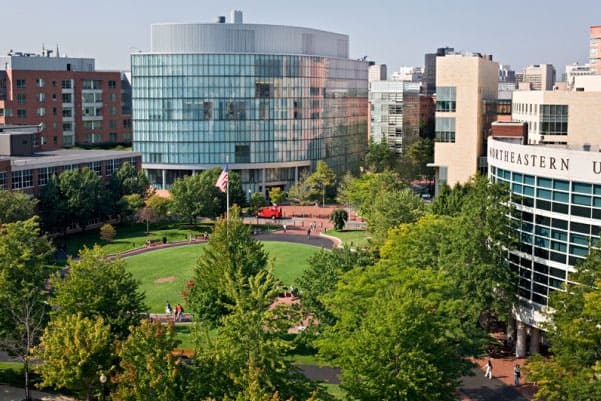 also got a full-tuition scholarship toNortheastern University. The parents, who are in their 60s, would have to borrow six-figures to make Yale financially possible.
To me this is an absolute no-brainer decision. Here was my advice, “Go to Northeastern!!!!”
This case also illustrates something else that’s common – a high-income teenager who gets nothing from an Ivy League school can routinely snag big, fat merit scholarships from countless other schools.
I’ve heard from so many moms and dads focused on underwriting an elite-school education through my course (there is still time to register if you’re interested), in my talks and through my blog, that I felt compelled to write a post pointing out some key things these parents need to know.
You don’t have to go to an elite school to succeed!
This seems incredibly obvious to me, but it isn’t to many parents in wealthy communities that seem to view  getting into prestigious colleges as some kind of trophy sport. For some parents, it becomes an obsession while their kids are still in diapers.
 getting into prestigious colleges as some kind of trophy sport. For some parents, it becomes an obsession while their kids are still in diapers.
A Princeton admission rep once told someone I know that parents with preschoolers ask her what private schools their children should attend to boost their ultimate chances of a Princeton admission. Wow!
Even if I was to concede (and I’m definitely not!) that all the best jobs in the entire country go exclusively to the graduates of the most highly ranked colleges and universities, that would leave about 99.5% of jobs left to the rest of us.
If you don’t believe me, take a few minutes some day and look at your LinkedIn contacts. I bet most, if not all, of  the most successful contacts you have did not attend a trophy school!
 the most successful contacts you have did not attend a trophy school!
I made the LinkedIn suggestion recently when I was giving a talk at a financial conference in Las Vegas that attracted some extremely successful, fee-only financial advisors from across the country. When someone asked about the elite school advantage (he assumed there was one), I reacted by instructing anyone who had attended an Ivy League school to raise his/her hand. No one in the room did.
There have been some excellent and highly touted studies on whether an Ivy League bachelor’s degree conveys a professional advantage for students. The main conclusion of these papers was this: students who attend Ivy League institutions and equally bright students who apply but get rejected from Ivy League schools end up making the same amount of money in their careers. These are bright and motivated students, after all, who can succeed wherever they go to school.
There was an exception to the research finding. Minority and first-generation students who don’t enjoy the same advantages as the students whom the Ivy League schools specialize in educating – wealthy students – did gain an advantage from attending these schools.
This Should Make You Feel Better
What should make parents feel better is this conclusion from Alan Krueger, the famous Princeton economist and coauthor of the studies:
He pointed out that the average SAT score at the most selective college that students apply to is a better predictor of their future earnings than the average SAT score at the college they attended. Read that again and let that sink in!
Here are excellent summaries from The New York Times and the Brookings Institute on what the famous Ivy League studies uncovered:
Revisiting the Value of Elite Colleges
Who Needs Harvard?
It’s What You Do in College That Counts!
A Gallup survey conducted with Purdue University last year provided further evid ence that people should really stop fixating on the elite schools.
 ence that people should really stop fixating on the elite schools.
The survey results indicated that the type of institution that college graduates attend matters less to their future happiness at home and work than the experiences they have at whatever college that they end up at. In fact, the survey concluded that whether respondents attended an elite school, a public flagship, a private college or a regional state school didn’t matter at all.
I wrote the following blog post about this survey and used my daughter Caitlin (see photo), a Juniata College graduate, to illustrate how you can be incredibly successful at a college that most people have never heard of:
How My Daughter Made the Most Out of College
Striving for elite schools can cripple teenagers mentally
Finally, I’ve left the most important factor in the college-admission rat race for last. What mental-health price are teenagers paying who are aiming for these elite schools?
I had a mom in my class wonder last week if the burnout her daughter, a junior, is experiencing is normal. The girl is taking four AP classes and a honors class on top of all her extracurricular activities. The mom is worried how her daughter is going to do when she’ll face this crushing load while visiting colleges, applying to schools and taking her standardized tests.
I encounter this issue a lot when I talk at schools in high-income areas with ambitious parents. What I tell them is that their children do not have to be super human. There are many schools that would love high-achieving students whether they take four AP classes a semester or two or one and will reward them with merit scholarships.
I see a lot of panic at these schools where parents worry that other students are pulling ahead academically so they pile on more AP classes. At the high school where my husband attended, the premiere public school in Denver, some students are starting Calculus as freshmen to try to gain an edge. It’s nuts!
This academic escalation can have tragic consequences.
I’ll be giving a talk at Gunn High School in Palo Alto this spring (I’ve given several talks at Silicon Valley high schools) that has experienced eight student suicides in roughly the past five years.
I would highly urge parents of teenagers attending these pressure-cooker high schools to read a wonderful book written by Madeline Levine entitled, The Price of Privilege: How Parental Pressure and Material Advantage Are Creating a Generation of Disconnected and Unhappy Kids.
Here is a guest post from my blog recently that synthesizes Levine’s message that is definitely worth reading:
Why Affluent Teens Are Miserable
Bottom Line:
There are amazing colleges and universities in this country, many of which are under the radar, that offer excellent opportunities for their students.
It’s important to know that nationally around 75% of students get into their first-choice school. At most colleges and universities, it’s actually a buyer’s market not a seller’s market. Students have many, many choices if they are savvy enough to not just look at the same old three or four dozens schools that smart, high-income students tend to focus on.
Friday, February 13, 2015
NCAA athletic recruitment rules you need to know
You’ve probably seen the headlines where eighth-graders who can’t drive yet and haven’t taken algebra are being recruited to play athletics in college.
Both sides of this equation sound a little crazy to me. The idea of a college or university betting its future on an adolescent whose hormones may or may not have kicked in seems a little risky. And a very young teen deciding where they are going to college five years down the road – really? But this is happening, and the athletic recruitment calendar is skewing earlier and earlier.
High school athletes interested in playing in college need to understand some basic principles. Visits are specifically defined as “official” and “unofficial.” Official visits are paid for by the institution.
According to NCAA rules, these are not allowed before a prospective student-athlete becomes a senior in high school. It’s also important to note that student-athletes are limited to one “official” visit per institution and five overall. The rules also state that the visit cannot last more than 48 hours and that the student must already have registered with the NCAA Eligibility Center and have had their test scores and high school transcripts sent to the college or university.
An unofficial visit is when a student-athlete and accompanying family choose to visit a college and are not reimbursed. Prospective student-athletes are allowed to make as many of these visits as they like during their sophomore, junior and senior years. A typical “unofficial” visit might include a tour of the campus, meetings with coaches and with other athletes.
Even if no colleges are showing you the love, that doesn’t mean you shouldn’t be proactive in your pursuit of playing your sport in college. Here is a basic athletic recruitment timeline:
Junior year: Compose and revise your college list at the beginning of the year. It’s important to remember that Division 3 schools do not offer athletic scholarships, so if you’re thinking about being recruited for the financial incentives, prepare your list accordingly.
Research the performance of your sport at each school you’d like to consider. Some sports such as swimming and track are time-based and it’s easy to get a solid grasp on how competitive you’d be at each school. Team sports such as basketball, football, soccer and lacrosse are much more nuanced. Contact coaches at each school before Thanksgiving. Ask your coach to contact each the coaches as well.
• Make “unofficial” visits.
• Prepare and send a sports/academic/extracurricular resume.
• Prepare and send a “highlights” video to each coach.
• Follow up with coach with your stats, schedules, etc.
• Register with the NCAA Clearinghouse in May.
• Send your final junior year transcript.
• Participate in camps and showcases during the summer.
Bierer is an independent college adviser based in Charlotte. Send questions to: lee@collegeadmissionsstrategies.com; www.collegeadmissionsstrategies.com
Read more here: http://www.charlotteobserver.com/2015/02/09/5504532/ncaa-athletic-recruitment-rules.html#.VNmP3_nF-TM#storylink=cpy
Thursday, February 12, 2015
How to Deal with a Drop in Your Teen’s Grades
via https://www.teenlife.com/blogs/articles/how-to-deal-with-a-drop-in-your-teens-grades
A drop in school performance can be worrying for any parent; however, it is something many teens go through at some point during their education, and is often nothing to be overly concerned about. That said, it is important to ascertain the reason why, and rule out any underlying serious cause.
Noticing a drop in school performance
Sometimes the cause of a dip in performance is reasonably obvious: your teen might have started a new school (especially if they have moved up to high school), has problems with friends, is getting inadequate sleep, spends too much time participating in afterschool activities, has a busy social life, or is preoccupied with the internet. At this age, teens are simply unable to see the big picture or the relevance in working hard, and their drop in grades could be caused by laziness, distraction, or a lack of motivation. A slight drop in grades every now and again is rarely a reason to worry; however, if the slip is sudden and dramatic, or occurs over a sustained period of time, then there could be more serious, underlying reasons.
Ascertain what the issue might be
In many cases, your teen is going to hint at what the problem is. They may say that the teachers don’t understand them, mention that they haven’t been getting along with friends, or voice a lack of motivation or interest. In some cases, they might not give any clues away at all. If a slip in grades has no seemingly obvious cause, you will need to try to ascertain the reason. While it is natural for a parent to feel alarmed by a sudden drop in performance, especially if college is around the corner, going in feet first can do more damage than good. Find a quiet moment to speak to your teen, and casually turn the conversation around to grades. If they clam up, then leave it, and try again later. Try not to be accusatory or demanding; your teen isn’t going to open up to you if you are ranting or blaming. Additionally, if you have a feeling that the problem is down to motivation more than anything else, lecturing will only make your teen feel inclined to oppose or rebel against your advice.
Speak to the school
A teen’s grades may fluctuate a little, and so it won’t help anyone if you run down to the school when your straight A teen suddenly gets a B. However, if the drop in grades is sustained, then you will need to speak to their teacher. As with your teen, don’t go in all guns blazing—hurling accusations is going to be counter-productive; rather than apportioning blame, it is better to ask them if they have noticed anything they are concerned about. Teachers can often provide valuable insight into what is happening at school, and parents usually only hear one side of the story; perhaps your teen has been struggling for a while, and now feels out of their depth or is involved with conflict you were unaware of. If you feel that your teen’s school environment is the problem, liaise closely with school staff (even the principal) to try to get things resolved; if you can’t, then moving school might be the only alternative.
When there is an underlying issue
When teens are experiencing emotional upset, such as bullying, or are dealing with a mental health issue like depression or anxiety, it is hard to open up to a parent, and is not always apparent to a teacher.
A drop in grades could also indicate a serious problem such as substance abuse, or might be caused by an undiagnosed condition such as ADHD, problems with hearing or sight, or a learning disability. Therefore, if the school is unable to provide any insight, and you aren’t getting a great deal from your teen, it is important to visit your doctor to rule out any underlying medical cause.
Grades are not the most important thing
Whatever the reason for your teen’s drop in grades, it is important to handle the situation in a calm manner. In the case of a lack of motivation, it can be incredibly frustrating for a parent to see their child frittering away their education, without any thought to their future, but shouting about how they will invariably fall on deaf ears. If motivation does seem to be the issue, give them tangible goals to aim for; talk about their future career plans or college choices, and calmly explain why working hard is important.
If there is an underlying cause, do whatever it takes to support your child. Try not to put too much emphasis on grades: you know how important they are, but your teen may feel overwhelmed, worried, inadequate, or guilty for letting you down if you make too much of a big deal about them. Let your kids know that effort, and trying their best, is more important than grades.
The most valuable thing you can do as a parent is let your teen know that you are there for them, and you care about them, rather than just their school performance. Yes, good grades are necessary, but so is your child’s happiness, and they need to know you are on their side rather than piling on extra pressure they really don’t need.
Monday, February 2, 2015
Happy National School Counseling Week - 3 Ways High School Counselors Can Help Students/Parents
Students struggling academically or with personal issues can seek help from a high school counselor.

High school counselors don't just help students arrange schedules and apply to college.
No day is typical for high school counselors.
"You can have a student walk into your office and they could be homeless," says Tawnya Pringle, a school counselor at Hoover High School in San Diego. Or she may need to counsel another student stressed about making straight A’s and worried his or her parents will be upset if that doesn’t happen.
School counselors help students thrive academically, personally and socially, and assist them in exploring their options after high school. The American School Counselor Association, a professional group, is sponsoring National School Counseling Week Feb. 2-6 to promote the profession.
"The absolute biggest misconception, without a doubt, would be that we're just there for scheduling," says Shelby Boisvert, a guidance counselor at Lowell High School in Massachusetts. She thinks most people don’t understand that most school counselors are therapeutically trained to counsel individuals.
Find out below what else school counselors have to offer students and parents.
Academic support: Services for students who are struggling academically often go underused, says Pringle, the counselor in California, who was also a finalist for the national 2015 School Counselor of the Year award.
"I think sometimes students are embarrassed," to ask for help, she says, or some students may have had a bad experience with a school counselor. Counselors can sit down with the student’s teachers, for example, she says, or connect students with peers dealing with similar struggles so they can learn from one another.
Freshmen at Boisvert’s school in Massachusetts take a seminar that includes content on establishing good study habits and patterns, which students can use throughout their academic careers.
Parental counseling and support: Counselors can offer families strategies on parenting and helpful advice on how to connect with their children, says Pringle.
"I've had a lot of parents come in over the years that just have said, 'I don't know what to do. How do I handle when my teenager is doing this, this and this at home?'" she says. Sometimes she’ll recommend family therapy if there are more series issues at home.
Boisvert’s school offers after school training for families on how to fill out the Free Application for Federal Student Aid and how to access mental health services, among other topics, she says. But connecting with working parents can be a challenge.
Pringle recommends parents arrange a one-on-one appointment with their child's school counselor as a good first step in establishing the parent-school counselor relationship.
Individual counseling: Students can seek one-on-one help from their school counselor to discuss personal issues, such as bullying, or seek crisis counseling, says Pringle.
"Sometimes there’s a myth that we do therapy in schools and that's not it," says Pringle. School counselors are trained to be the front line in terms of assessing what the issues are in a child’s life, she says, but if they feel something more in-depth is going on they’ll refer the student to a therapist.
She informs her students upfront that their conversation is confidential – unless the student divulges something that relates to his or her safety.
Both counselors say the number of students they are responsible for can make the job a challenge. Nationally, the ratio of high school students to a school counselor is nearly 500 to 1, The New York Times recently reported.
But that shouldn’t deter families from seeking their services.
"School counselors are in this profession because we want to connect and because we want to help, and help them and make a difference in their lives," says Pringle.
Have something of interest to share? Send your news to us at highschoolnotes@usnews.com.
Subscribe to:
Posts (Atom)