Showing posts with label decisions. Show all posts

Saturday, May 2, 2015

4 reasons to notify colleges you will not be attending

http://www.examiner.com/article/4-reasons-to-notify-colleges-you-will-not-be-attending

Many students hurry to send in their tuition deposit to the college they plan on attending in the fall. Unfortunately, many of these students forget about the other colleges that sent acceptance letters. Here are four reasons why students should let the other colleges know they will not be attending in the fall.
  1. Open a spot on the waitlist. If the institution is selective, it probably has a waitlist with a lot of worthy student waiting for an opening. By letting the college know they will not be attending, it could open up a spot for someone who is on the waitlist. The sooner the college hears back from students turning down their offer, the sooner they could offer the spot to another student.
  2. Avoid awkward emails and phone calls. The media focuses on the colleges that have strict May 1 deadlines to submit tuition deposits. However, many colleges allow students to submit deposits after May 1. If these colleges do not hear back from students, they may start contacting the students to learn of their plans for college. While admissions officers probably know that students are planning on not attending in the fall, they need to hear from the student before cancelling their application. Sometimes these conversations can make the students feel awkward or uncomfortable. To some students, it feels like a “break-up.” Students can avoid these awkward conversations by letting the colleges know as soon as they know they will not be attending.
  3. Keep a good relationship with the admissions officer. There are great admissions officers out there and many form great professional relationships with their prospective students. These admissions officers spend countless hours working with students throughout the year, including traveling to high schools and college fairs, answering questions, and reading applications. They might have done more work for students than students think, including “going to bat” for the student to admit them. It is the nice thing to do for students to let them know they will not be attending. Plus, students never know if they will come into contact with the admission officer in the future. For example, if things do not work out at the college they initially chose, being nice and professional with the admission officer at the college they once turned down could help them if they reapply.
  4. Help colleges understand why you chose another college. In addition to telling colleges they are not attending, colleges will also want to know what college the student chose to attend and why. This is important information for them so that they can learn what they can do in the future to attract students. For example, if the financial aid package was lacking compared to the college the student chose, it is important to let them know. This could lead the college to change their financial aid policies and help future students who apply for admission.
Most colleges make it easy to let them know that students will not be attending in the fall. Some include a form that can be mailed back to the admissions office with postage already paid, while others ask students to log into their admission portal to let them know. Even a simple email to the admissions officer letting them know of their plans would be helpful. No matter what, students should let the colleges know they will not be attending in the fall.

Friday, May 1, 2015

12 things to do after submitting your tuition deposit

http://www.examiner.com/article/12-things-to-do-after-submitting-your-tuition-deposit

Congratulations to all of the students who have made their final college choice. While the big choice has been made and the tuition deposit has been sent, there are still some things students need to remember before heading off to college in the fall. Here are 12 easy, but important, things to do after submitting the tuition deposit.
  1. Notify other colleges you won’t be attending. The majority of colleges make it very easy for students to let them know that they will not be attending in the fall. By turning down the admission offer, it could open up a spot for someone on the waitlist. It is also professional and nice for students to let the colleges and admissions officers know they will not be attending.
  2. Thank everyone who helped. There were probably many people who helped sometime during the college admissions process. Some of the helpers probably include school counselors, teachers, letter of recommendation writers, coaches, parents, and family members, just to name a few. It was a long process and a lot of people helped out. It is a nice gesture to thank them for their help and let them know the college you will be attending. Let the helpers celebrate your success and future plans.
  3. Submit the housing application/questionnaire and deposit. Many colleges have deadlines to get the housing application in to guarantee housing for incoming freshman students. Students need to make sure to pay attention to the deadlines and submit all required housing documents by the deadline. Students should also make sure they are honest when filling out the housing questionnaire. It is important for students to answer the questions honest about who they are, not who they think or want to be. For example, if the student is a little messy, they should not say they are neat. The questions on the housing application help the housing office match students with similar habits. When students are polar opposites in regards to habits (i.e. room cleanliness), it could cause some conflicts.
  4. Pay attention to email and the mail. The college may contact students to request information. Typically these requests have deadlines and deadlines are sometimes non-negotiable. Therefore, students should make sure they open every piece of mail and every email from the college to ensure they respond to any request from the college. Missing a deadline or not submitting a requested document could jeopardize enrollment in the fall.
  5. Update FAFSA and provide required financial aid documents. If students estimated the figures to get the FAFSA in by the deadline, students and parents need to log back in and provide correct information. In addition, if the college is requesting financial aid documents, such as tax forms, students need to make sure the items are submitted. For many students, the financial aid award letter played a large role in the final college decision. Therefore, students need to make sure all documents are submitted to the financial aid office to ensure they do not lose out on a scholarships or grant.
  6. Submit final high school transcript. The majority of colleges need and require the final transcript. Many high schools will automatically send transcripts to the colleges. However, it is a good idea to check with the school counselor to make sure the transcript will be sent.
  7. Submit the latest college transcript. If students have taken college courses, the college the student will be attending in the fall will need the transcript. Without the official transcript, the college will not be able to award credit for the classes the student already took.
  8. Submit AP and/or IB test scores. Many colleges will give college credit for AP or IB test scores. However, the only way to ensure the credit is given to the students is to make sure the official test report is sent to the college.
  9. Sign up for placement tests. If colleges require placement tests, it is important to sign up. Placement tests will help academic advisors place student in classes in the fall.
  10. Sign up for academic advising and registration. Depending on the college, some courses may fill up quickly. The sooner students sign up for academic advising and registration, the sooner they can register for classes and ensure they get in the classes they need and want in the fall.
  11. Sign up for new student orientation. New student orientation is a great way for students to get familiar with the college, as well as meet other new students. Make sure the date is on the calendar and make plans to attend.
  12. Continue looking for scholarships. It is never too late to get a scholarship. In addition to my monthly list of scholarships, there are also many great scholarships search site available, such as Fastweb and ScholarshipExperts.
The above list looks long, but the tasks are easy. Students should make sure to take care of all of these items to ensure a smooth transition to college. In addition to the above items, colleges may have additional things to do. Therefore, students should remember to pay attention to their mail and email for anything from their college.

Monday, April 27, 2015

Countdown to College: 6 Tips to help make the final college decision

Just ask any family that is struggling with making the final college choice how envious they are of the families where it was a slam-dunk decision. It’s that time. A final college decision needs to be made and a deposit check needs to be received by May 1.
Here are some tips for families suffering through sleepless nights, pros and cons lists, self-doubt and the agony of indecision.
▪ Eliminate the colleges where the all-in price (tuition, room/board, expenses) makes you gasp loudly, where you just feel uncomfortable.
▪ Compare the financial aid packages of the remaining colleges on an apples-to-apples basis by creating a spreadsheet with the following headings: tuition, room, board and expenses (include travel and entertainment) equals Total Cost, and then grants and work-study with separate line items for subsidized loans and unsubsidized loans.
▪ Network socially. Join Facebook groups for admitted students, read reviews and/or chat with current students on College Confidential, speak to friends and neighbors who have children or relatives attending the colleges you’re considering.
▪ Compare the soft stuff. The emphasis on sports matters, whether the dining hall food is palatable matters, the culture of the campus and the surrounding area matters. Remember you’ll be living there four years.
▪ Evaluate the academics. Which companies are recruiting on campus? What is the grad school acceptance rate for your anticipated area of study? What is the depth and breadth of your major?
▪ Think beyond the workforce or grad school. Your college years should teach you how to think critically. Michael Roth, president of Wesleyan University in Middletown, Conn., and author of “Beyond the University: Why Liberal Education Matters,” says: “Your college education should prepare you to thrive by creating habits of mind and spirit that will continue to develop far beyond one’s university years. Thriving means realizing your capabilities, and a liberal education should enable you to discover capabilities you didn’t even know you had while deepening those that provide you with meaning and direction.”
He also share his thoughts on making the final decision, “Your college choice isn’t just about ‘fit’ and ‘comfort’; and it certainly shouldn’t be reduced to the prestige of the school or the amenities if offers.
“Your college choice should reflect your aspirations, where you can imagine yourself discovering more about the world and your capabilities to interact with it. The college you choose should be a place at which you can thrive, finding out so much more about yourself as you also discover how the world works, how to make meaning from it and how you might contribute to it.”
Bierer is an independent college adviser based in Charlotte. Send questions to: lee@collegeadmissionsstrategies.com; www.collegeadmissionsstrategies.com

Sunday, April 26, 2015

"D" Day for College Is May 1: Four Steps to a Wise Choice

http://www.huffingtonpost.com/lisa-kaess/d-day-for-college-is-may-1-four-steps-to-a-wise-choice_b_7110638.html

We just passed "tax" day, but if you're a college-bound senior - or the parent of one - "D" day looms on May 1st. That's when students "decide" which school they'll attend, sending an official acceptance letter - with a "deposit" to hold space for the fall and reserve housing. Despite media hype, many students gain admission to their school of choice. College has also become the "default" choice for young women; according to a recent survey of roughly 60,000 households by the Bureau of Labor Statistics, 72.7 percent of 2014 female high school graduates enrolled in college versus 64 percent of young men.
But what if you still have doubts?
Choosing the "wrong" school carries risks. Students happy with their choice today could see things differently in six months, because the reality of college life may prove a far cry from the marketing hype. It could be tough to make friends, or after a year you learn how rough it really is to get into the major or program that brought you there in the first place. And with college costs running over annually $42,000 for private 4-year schools and nearly $19,000 for in-state tuition, those choices come at a high price. Dropping out, starting over at a new school, or losing credits in a transfer compounds the hit.
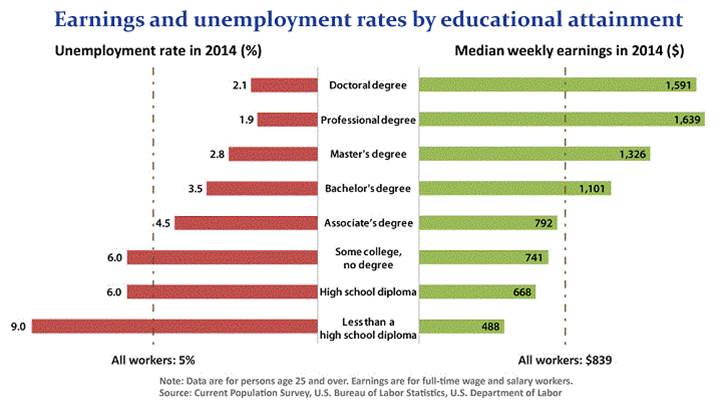
2015-04-21-1429642706-910082-educatedgeneration.pngThe good news is that whether you attend a public or private school, attending--and most importantly -- graduating from college remains a smart choice. Overall, college graduates earn considerably more than those with a high school diploma, and have muchlower rates of unemployment throughout the economic cycle. And according to a recentstudy by the Pew Research Center, Millennials could become the most highly educated generation to date - with twice as many female college graduates compared with their grandmothers (known as the "silent" generation).

So let's break down the decision into four parts - the school, the package, and you -- with extras for those still seeking options.
Choice of School: If you have a "short list" of colleges that have accepted you, ask what attracted you to each one? Was it a "safe" school, a "party" school, or close to (far from) home? What percentage of freshmen drop out and how many finish in 4 years or even 6? What are the housing options and alternatives if they don't work? How secure is the campus for students in general and women in particular? Does the school help students find internships, outside programs and jobs?
Let's talk money. Forget the headline cost of tuition - look at the aid package offered to you - also called the "net price". The Consumer Financial Protection Bureau (CFPB) has standard "shopping sheet" that breaks down costs clearly and explains basic terms - nearly 3,000 colleges and universities have adopted it since 2012. They also have an online comparison tool that helps families evaluate a few schools at once. And the outcome might surprise you. For public schools, the CUNY (City Universities of New York) system has some of the lowest "net prices" in the New York metro area and the country; at the other end of the scale, Stanford University recently announcedthat students from families earning below $125,000 generally won't pay tuition at all (this doesn't include room and board).
2015-04-22-1429668296-81728-WeeklyEarningsbyEducation_BLS2014.jpg
Chart Source: Bureau of Labor Statistics
What about you? Do you believe you'll get into the program or major you want? Are you an artist looking at colleges majoring in Big 10 sports and Greek life? Does the campus have people who look like you and are there activities that reflect your culture? Will you be OK with the weather and does the surrounding area interest you? And how will this school or university help you graduate in a timely manner if you change majors?
If you're still happy with your original choice - congratulations! Now you can focus on finishing your senior year with solid grades and start the roommate selection process.
Other options: Still dissatisfied? Get ready to act immediately after "D" day. The National Association for College Admission Counseling (NACAC) releases a Space Available list right after May 1st and updates it regularly through mid-June. This list will mention whether a school has seats available for incoming freshmen, and whether financial aid and housing is still available. You must act quickly and know you're starting from scratch; schools will likely make a decision within six weeks.
But buyer beware - during this period colleges may focus on students who fill specific holes in their roster - students who apply for a less popular major, or accept diehard future engineers or business students to fill spots in those departments. They may also accept students who require less financial need or those willing to attend but not in their first choice of major. If you truly want to attend a specific school, speak up and let the admissions office know you really want one of those slots.
If none of the above works, community college might be the best bet while you improve skills, get focused, or go for a two-year Associates degree. If you plan to apply to another college afterward, explore whether those credits are transferable generally, or only to in-state schools. Failure to do this research can be as costly as choosing the wrong four-year school.
Yes, even for those on the cusp of adulthood and ready for freedom, that annoying question still rings true: have you done your homework? The choice is yours.

Thursday, March 26, 2015

Creating the College List


 COLLEGE STUDENTS
Originally posted: http://www.huffingtonpost.com/jeannie-borin/creating-the-college-list_b_6928262.html?utm_hp_ref=college&ir=College

For many, there are colleges that students are intent on going to, expect to be accepted, and can afford. It could be a state university, a school that friends are going to, a school students have been told about, or an elite private school where some are qualified.
However, these college factors do not cover numerous variables about college life that are significant such as academics and affordability. Creating the college list is individualized and personal. If you are flexible and your goal is to attend a university that is a good fit for you, your interests, and your future, then creating a college list is paramount and should involve the following factors:

1. Create files and stay organized. Use a specific notebook or online files for any notes, communications, ideas, and questions. Anything that relates to your eventual college list should go in one place. Each college should receive a designated page that can be referred to later for essays, interviews and more.

2. Make a list of your priorities. What are you looking for in a college? Do you like a smaller college in a rural area or a larger public university in big city? a large student enrollment or smaller? Academic programs of interest? Activities? Opportunities? Climate?

3. AFFORDABILITY For some, this is not an issue. For most, it is. It is important to know what your family is able and willing to pay in out of pocket expenses. Also, it is wise to consider you and/or your parent's willingness to incur debt. If there is a gap between the Expected Family Contribution and the Cost of Attendance, you will want to look for schools that provide a large percentage of need through Federal Aid and have a solid record in providing merit or Institutional Aid. If you are not eligible for significant need-based aid, then you are going to want to apply to schools where you will be in the upper 25 percent of applicants as far as GPA and test scores. Statistics on schools' generosity or lack of are readily available. It is good to work with a college financial planner who is familiar with using the numerous resources available.

4. Explore colleges within your area that are different -- a public and private college. Visiting gives students a much clearer idea of what they want and what they don't!

5. ADMISSIBILITY Use resources such as College Data, College Board's Big Future, College Results, Fiske Guide, the college website and a slew of others. Create your long list of schools for further review. Note the admission requirements. Do remember that any guide or website does not know you. So, it is best to review with a counselor to find your best fit.

6. Make a list of factors that are your priorities: activities, career center, academics, housing, athletics, size and location, cost

7. Once you have completed your research, it's time to put together a preliminary college list. It's best to create categories of reach, 50/50 and likely acceptance. This list could have 20-30 colleges on it. Once this is complete, review your personal criteria, do further research and begin to narrow your list. Narrow your categorized list to your working college list to include about 10 colleges. Try to accomplish this by the start of summer so you are prepared when the Common Application and other colleges release their applications for your season. Don't hesitate to get help! Creating your college list can get complicated and you most likely will have many questions.

Thursday, October 2, 2014

Understanding Early Action, Early Decision, Restricted Early Action and Rolling Admission

Before you decide to apply "early" to a college, it's a good idea to understand what that means. Like so many other areas of college admissions, it's not exactly straightforward. Early Action (I and II), Early Decision (I and II), Restricted Early Action and Rolling Admission have generally agreed-upon definitions, but some colleges also have individual early policies that they apply independently.
Over 500 colleges and universities offer EA or ED programs; some offer both. In theApplication Info section (top left tab) on my adMISSION POSSIBLE® website, I offer up-to-date lists of colleges that offer early action, restricted early action and early decision plans, including their respective, current application due dates.
So that you can wrap your head around the concept, here are the general definitions:
EARLY ACTION (EA) I AND II
In this non-binding application program, a student usually applies EA I on or before the first of November (sometimes Nov. 15) and receives an admission decision by the middle of December. If accepted, the student is not obligated to commit to the college until the mandatory May 1 "college deadline day." EA II is a second chance to apply early at the beginning or middle of January, with a response back from a college sometime four, six, eight weeks out. Early Action colleges usually allow students to apply to other EA schools.
EARLY DECISION (ED) I AND II
In this binding application program, a student applies on or before Nov. 1 (sometimes Nov. 15) and then receives his or her admission decision by the middle of December. If accepted, the student is obligated to attend that college. (Upon acceptance, a student must withdraw all other applications.) If he/she does not get admitted to an ED college, the applicant can then apply ED II to another college with a later deadline. Some Early Decision colleges even allow students to apply to other early application programs, as long as they are not binding; but others don't. Check this out on the admission section of colleges' websites.
RESTRICTED EARLY ACTION (AKA, SINGLE-CHOICE EARLY ACTION), REA
REA is a non-binding early action admission option in which a student may not apply to any other private schools' early program, except:
  • A college outside of the US
  • A non-binding rolling admission program
  • A public college or university whose admission is not binding.
  • An ED II program, if notification of admission occurs after January 1
Like EA applicants, a student has until May 1 to decide if she/he wants to attend the college or university. Schools that offer REA programs are Boston College, Harvard, Princeton, Stanford, and Yale. Applicants are asked to sign a statement stipulating that they agree to file only one early application.
ROLLING ADMISSION
This is an application program at some schools -- usually larger public universities -- in which applications are accepted, evaluated and decided upon as they are received. Applications are accepted until the college fills all of its spaces. There is no limit to the number of Rolling Admissions schools to which you can apply even if you apply to EA, ED or REA colleges.
Having identified all of the above, I am sorry to report that every year many colleges seem to change what they do about early applications. The best approach to finding out how schools on your college list handle early applications is to go to their individual admissions websites and/or call admissions offices directly. The Common Application website and US News' Best Colleges 2015 are other good sources.
EARLY ACCEPTANCE RATES
Many students and parents want to know whether applying early will give applicants an edge. Unfortunately, the short answer is that it depends. Applying early will not help you if you are not a competitive applicant. When push comes to shove, though, "hooked" students tend to have a better chance of getting accepted in early plans. What does "hooked" mean? It is an applicant who has a substantial admission edge if they apply early (or for that matter, regular) admission because they are:
  • A very desirable, recruited athlete
  • An applicant with a distinct, noteworthy talent the college is looking for
  • High potential, under-represented and/or disadvantaged minority students
  • Students who are children of major donors to the college
  • Students who are legacies (children of a parent who is an alumnus)
  • Children of parents who are celebrities, wealthy business executives, politicians and the like
  • Faculty children
Every year, college admissions websites provide information about how many students they admit from early admissions versus regular admissions. And every year, The New York Times posts early admissions rates for the previous year in a story that predictably appears sometime in March. This information can also be found atwww.collegedata.com

THE ENDPOINT OF APPLYING EARLY

There are three outcomes of applying early: Acceptance, Deferral and Denial. In an earlier blog, "Early Applications. Bad News: You Were Deferred. Good News: You Weren't Denied," I go through the steps for how to handle a deferment. In my next blog, I'll let you know what's in it for colleges to offer early applications and how you can decide whether it makes sense for you to apply early.

Thursday, September 4, 2014

The Truth About Senior Year of High School: What to Expect and How to Deal

As the college Class of 2019 gears up for their last year of high school, there are a lot of emotions and uncertainties about what the next year -- and the four years after that -- will bring. High school seniors are on the brink of making some of the biggest decisions of their lives, and for many students and their parents, it will feel as if this moment came sooner than they anticipated.
The previous three years of high school went by in the blink of an eye, and senior year will be no different. Navigating the final year of high school can be eerily similar to the first, with a lot of nerves and high expectations for the "best year ever."
Senior year of high school lends a lot of "lasts," but for the first time students will be navigating the college admissions process while trying to make the most of what's left of high school. Students: Start senior year focused and prepared by knowing what to expect and how to resolve any challenges you may face.
Here's what to expect senior year, and how to handle it:
Your grades STILL matter.
Just because colleges may initially only see your first semester grades doesn't mean that the rest of the year doesn't matter. Colleges look at grades from all four years of high school, even if colleges don't see senior year grades right away. Colleges will require you to submit a final grade report, and poor grades senior year can keep you out of your dream college. Some colleges have even been known to rescind acceptances if your final transcript shows a sharp drop in grades.
Stay focused on finishing out the year strong and keep your grades up! If you already have an A average, maintain it. If you're somewhere between a B and A, work hard to bring it up! Colleges will notice that you're working hard and that you have the maturity to handle a college course load.
Senioritis will hit -- fight it. 
Whether it strikes mid-fall semester at the height of application season, or next semester when school seems to be winding down, the plague known as "senioritis" -- a slide in motivation and classroom performance -- will affect you. It's important to know that senioritis, while playfully named, is no joke. As I said before, colleges can rescind your offer of admission if your performance drops. Also, succumbing to senioritis can leave you ill prepared for a college course load, as you can get used to putting in the bare minimum to get by -- which won't fly next year.
So what's the cure? Set realistic goals throughout the school year and work to attain them! Whether it's an A in a challenging course, preparing for a competition or volunteering more often, working toward simple goals will keep you on track for a great finish to senior year.
You will be busy, so stay organized!
Balancing a tough course load, college applications, extracurriculars and all the final activities that come with senior year will be an enormous challenge. Time management is essential to your success, especially as you dive deep into those college applications.
Keep a detailed agenda with important deadlines, test dates and other obligations you'll have throughout the school year. Set aside blocks of time for studying, extracurriculars and college applications. Putting it in writing will hold you accountable and keep your schedule organized.
College applications will be due sooner than you thought. 
Jan. 1 application deadlines -- and even November Early Decision deadlines -- may seem too far off to worry about now, but they're really only a few weeks away. It's important to get started on your applications as soon as possible, as you'll need plenty of time to refine your essays, gather letters of recommendation and finalize your activity list and resume.
Don't take these lightly! While it may not seem like a lot of work now, if you're scrambling the day before your apps are due, you're bound to make careless mistakes and forget to include certain details or materials.
It'll be exciting -- and emotional. 
There will be a lot of lasts this year. Last first day of school, last homecoming, last football game, etc. It's easy to get caught up in the nostalgia, especially as the reality of the end of high school begins to set in. It will be an emotional year as you prepare for college and begin to say goodbye to your school, teachers and friends, but it's going to be fun!
Just as you make time for schoolwork, make time for friends and fun. Senior year is important as it's the stepping-stone to college, but it's also an important time to spend with family and friends, making memories before you head off in different directions. Stay focused on academics but also embrace opportunities you have to make the most of your last year.
During your senior year, you'll make some great memories. You'll stress over college applications, exams and graduation. You'll experience disappointment -- whether it's a college rejection or losing a big game for the last time. Senior year requires students to do a lot of growing up in a short amount of time, but with support from your parents, friends and teachers, you'll make it through ready to tackle the next chapter of your life.

Monday, May 26, 2014

Need a Plan B for college? There are options

Let’s just say Plan A didn’t work out so well; you and your student were surprised by a few of the rejection letters.
Hopefully you planned well and had a few solid safeties on the list, but maybe now, several months later, they are not looking quite so attractive. Do not despair, there is hope, there is a Plan B.
The National Association for College Admission Counseling (NACAC) has created its annual College Openings Update. And as of May 17, more than 450 public and private colleges still had openings.
The Update lists not only which colleges have openings for freshmen and transfer students but also has an update on housing availability and financial aid opportunities. The list is updated frequently and will be available until June 30. Vist www.nacacnet.org and type in College Openings Update in the search box.
Colleges with openings in North Carolina are Appalachian State, Chowan, Guilford, Johnson C. Smith, Lenoir-Rhyne, Montreat, Pfeiffer, Queens, St. Andrews, UNC Pembroke, Warren Wilson and William Peace.
Colleges with opening in South Carolina include Charleston Southern, Coastal Carolina, Erskine, Limestone and Newberry College.
There definitely are options available to the resourceful family. Joyce E. Smith, Chief Executive Officer of NACAC said: “Part of demystifying college admission is understanding that, for many institutions, the application process is a year-round endeavor. Some colleges accept applications throughout the year, while others may continue to have openings available even after the May 1 national response deadline.”
You might be surprised to see some of the public and private colleges and universities on the list, including Sarah Lawrence, Arizona State, Gonzaga, Ohio Wesleyan and the University of Vermont.
Just because there are openings doesn’t automatically mean an acceptance letter is guaranteed. Students still need to apply and take the time to prepare a compelling application and send all support materials, including transcripts, test scores and letters of recommendation.
After reviewing the list, students should contact schools of interest to find out deadlines and timelines and get details on their specific procedures to apply.
What if even this Plan B is not looking too optimistic?
If students and families can’t find a good match on the College Openings Update, they might want to consider taking a gap year. Investigate some possibilities at www.americangap.org


Monday, February 3, 2014

Juniors: A Guide to Senior Schedules Colleges will Love

While your elders anxiously await news from the powers that be in admissions, you, my junior friends, are working with parents, guidance counselors, and teachers to shape your final year of high school.  Unless, of course, you’re doing the IB, A Levels or any number of other national curriculums (here’s looking at you, China, India and Western Africa!).  But for everyone else: ‘tis the season for scheduling!  This is important (to you and us) and sometimes stressful, which, as per usual, means we’re here to help.  Here are some very general tips for maximizing what remains of your high school career.
Go Big or Go Home:  Now is the time to pull out all the stops and make the most of your abilities.  If you’ve just had a solid three years, try to take it up a notch.  We often see students who we wax and wane about but, if that file has a REALLY challenging senior year, it can be enough to make us pause and say, “Ok, the heat’s on.  Let’s see how they’re doing at the midyear.”  A very strong first semester performance can make you a real contender in this process. (NOTE: Strength is measured by your performance in the curriculum, so know yourself and your abilities; overdoing rigor and landing with Cs will not help your cause)  For those of you who spent three years conquering the academics at your high school, don’t stop now.  This is not an occasion for laurel-resting, so avoid the temptation of early dismissal AND two study halls AND those wacky electives in underwater basket-weaving.  Also, be honest with yourself when assessing two “equal” options.  Yes, AP Statistics and AP Calculus are both advanced level math courses, but you and I both know which one is harder.  (AP Calc is harder.  There.  I said it.)
Be Your Own Best Advocate:  Logistics can be a real pain when it comes to scheduling.  This is a fundamental fact of life, so it’s good that you’re learning to deal with it now.  Still, don’t give up the battle against red tape before it’s been fought.  If you’ve been a good student for three years, the administration might be willing to work with you when you get blocked out of a class.  Be thoughtful and respectful in proposing alternatives or requesting special permission to do an independent study or jump ahead in the curriculum.  And I should mention: this is the job of the student.  If you want a principal or counselor to trust your ability to take on responsibilities beyond the norm, don’t you think SELF-advocating sets a better tone?  You can update mom and dad over dinner.  If things don’t go your way, you or your counselor can mention it on your application this fall.
Keep It Robust: Yes, your high school only requires you to take three more classes to graduate, just like Chotchkie's only requires fifteen pieces of flair, but we all know how that panned out (am I dating myself with an Office Space reference? ).  Your state- or school-mandated minimum requirements are simply not the same set of credentials that highly selective schools want.  The goal should be five rigorous courses, every year, from the five core academic areas: English, Social Studies, Science, Math, Foreign Language.  You don’t need to have every area represented (particularly in senior year as many of you begin to specialize), but the goal is still five.  So, engineers, it’s ok to skip Latin and double up on math.  History buffs, you’re welcome to forgo a fourth lab science and make room for AP Euro and World. Just make sure you’re balancing cuts with additions.
Look Out for Number One:  I’ve saved the best for last.  Doing well in high school is important and getting into college is important, but you should place a premium on your own happiness and well-being.  There are 3,000-4,000 colleges in the US, and a handful of “good fits” for every student.  In the end you’ll be most successful as a person and student if you take the classes that excite you and do the best you can.  The college that is right for you will be happy with what you’ve done with your high school years.

Friday, January 31, 2014

When Should You Take the SAT or ACT?

A couple of years ago I listened in on a webinar about SAT strategies that impressed me. The guest speaker was Jeb Applerouth, who runs aneponymous test-prep firm that’s headquartered in Atlanta. Jeb gave me permission to share the following blog post where he discusses  whether there is an ideal time to take the SAT or ACT.   Lynn O’Shaughnessy
By Jeb Applerouth
March is the worst! Avoid it like the plague! Don’t you dare take October; that’s when the smart seniors are sitting. All the jocks take December, that’s the surest bet for a high score!
If you spend long enough in this business, you will hear chatter about choosing test dates strategically to garner a testing advantage.
One of my independent educational consultant friends recently reached out to me. She heard a rumor from another mom, while sitting in the basketball bleachers, that certain testsare considered “easier” based on the students takingpencil singlethem at that time. She wanted to know if she should have her clients prioritize any particular date.

There is No Statistical Advantage

How wonderful would it be to have the insider track on picking the right test date!
Unfortunately, in spite of the allure of being “in the know,” there is no statistical advantage in selecting one test date over another. That’s simply misinformation, being spread like wildfire in basketball bleachers across America.
I must admit that I too have been a purveyor of this particular brand of misinformation, driven primarily by having too small of a data set to draw any legitimate conclusions. Years ago, when I started keeping tabs on my students’ performance, I noticed some trends.
Back in 2002-2003, poring over my excel spread sheet, I noticed something. My students’ March scores were abysmal, but their May scores were amazing! Going off my extremely limited data set, I advised all my students: “Take May! May is the Way!” A few years later I changed my tune, and I was proselytizing June!
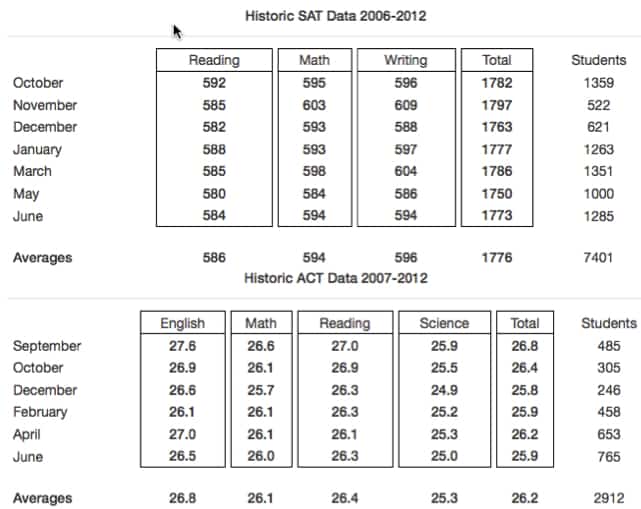
These days our data set has grown considerably. As a company, Applerouth has always been results driven and data focused. In our current data set, we have over 7,400 official SAT and 2,900 ACT results. Our findings do not come from flimsy anecdotal evidence: we are working from a legitimate data set. And this data set quickly wipes away any notions of preferential test dates.

Is There No Variance in Difficulty?

erasers small imageAlthough there is no consistent pattern, year over year, it is true that certain tests are objectively harder than others, and within a given test, certain sections are much more challenging than others.
Having taken over a dozen SATs and ACTs, I’ve experienced this first-hand. I have been slammed by particular science sections on the ACT, flummoxed by Math sections on the SAT. But the statistical equating process the College Board and ACT Inc. use, it turns out, is effective. The harder sections and test are balanced out by a different curve.
Additionally, if you take this test long enough, you realize that these companies recycle their content. SATs and ACTs are very expensive to create and calibrate; the testing companies are wise to get as much bang for their buck before retiring a test.
When a testing form is finally administered on one of the test-return dates – October, January or May for the SAT – December, April, June for the ACT- that particular test, now externally released, leaves circulation. On the December 2012 ACT, I was given the exact test form that I had already taken in 2010. As test forms are recycled throughout the calendar year, the notion of easy and hard dates loses further credence.
The Data tells all
Individuals may give more weight to the most recent data- suffering from recency bias: “the last two October administrations sure were tough! Avoid October!” Or they may privilege emotionally charged data points: “Billy tanked on December, but went up 300 points in May! Everyone should take May!” We need to take a long view with a robust data set; only then can we circumvent these cognitive errors and come to a clear understanding of the trends.
To dispel the myth of differential test date difficulty, I’m going to lay out the full data set as an appendix to this article. But I’ll summarize the data here. All of these results are from official testing administrations, reported by our students and their parents.
ACT
As you can see, the notions of an easy or hard test date do not bear out. The test dates are quite consistent in their level of difficulty. The appendix charts go into more granular detail. The only instances in which our data show a real swing in test difficulty correspond with a smaller than normal sample. Sampling bias in effect!

A few notes on the data

There is a slight maturation effect/test-retest effect, as students taking the early fall tests are more likely to be seniors who have already taken the test than are students taking the early winter tests. This effect is relatively weak, because for every test date, we have students taking the test for the first time, others for the final time, some having prepped with us, others having gone in to the test without any prep.

Friday, January 24, 2014

High School Seniors' January - June College Admissions To Do's, Redux 2014

Seniors! If you're not completely finished with your college applications now, surely you will be very soon. There are a few more things you need to do before you say "buh bye" to high school. Since it's easy to forget about admissions details once applications are submitted, this blog will help you finish up your senior year knowing that everything that needs to be completed, turned-in, or checked-off is taken care of.
Here is what to do during the months of January through June:

JANUARY 
ED APPLICATIONSIf you received an Early Decision acceptance to a college, you need to cancel your other applications. Write to each campus to which you applied, letting them know about your desire to withdraw.
EA AND REGULAR APPLICATIONS
For students who applied Early Action and/or Regular Admission, be sure to remind your high school counselor to complete the Midyear Report forms. All of the information entered on the Common App School Report form is automatically transferred to the Midyear Report. Midyear Reports should be submitted as soon as possible after 1st semester grades are available.
REGULAR APPLICATIONS
Complete and submit any regular applications that are due after the first of the year.

FINANCIAL AID
Fill out and submit FAFSA and PROFILE financial aids forms, as well as any individual college financial aid forms. Note: you will need your parents' help with this, and they must have their 2013 tax return information available.
FOLLOW-UP WITH COLLEGES
  1. For colleges that provide application information on-line, check the respective websites to make sure they have received all of your materials. Follow-through appropriately.
  2. Alternatively, call each college on your list to see if they have received all of the required application materials. If the answer is yes, say thank you and relax. If the answer is no, find out what is missing and immediately get the missing materials to the colleges.
  3. Through a letter or email, update colleges with any new information, including recent awards, athletic achievements, volunteer efforts, etc. If you have one, send them an updated copy of your activities resume.
  4. Also, let them know if there are any changes in your academic record since you submitted your application (you changed schools, added or dropped a course or received a D or F in a course). This is particularly important for students deferred for Early Decision, or Early Action Single Choice applications.
ADMISSION INTERVIEWS
If a college offers you an admissions interview, by all means, do it! On my adMISSION POSSIBLE website there is information about "Exactly What to Say and Do for Admissions Interviews." Doing a little prep work ahead of time will help you put your best foot forward with the admissions reps.

FEBRUARY
FINANCIAL AID/FAFSA/PROFILE
If you are applying for financial aid, make sure that you meet each college's requirements and deadlines.

FOLLOW UP WITH COLLEGES
  1. Send an updated copy of your school transcript that includes first semester grades to each college to which you have applied.
  2. If you have not done it before, update colleges with any new information, including recent awards, athletic achievements, volunteer efforts, etc.
GRADES
Many colleges pay close attention to second semester grades. Whatever you do, don't slack-off! Some colleges actually rescind acceptances if a student's senior year second semester grades drop precipitously. Continue to do your best work.

HIGH SCHOOL COUNSELOR

Make sure that your high school counselor has mailed in the Midyear Reports to all of your schools, including those at which you were accepted Early Action or Restricted Early Action.

MARCH
COLLEGE VISITS
As acceptances start coming in, consult with your parents about last-minute college visits to schools that really interest you.

APRIL
FINAL CONSIDERATIONS
  1. If you can, attend "Admit" programs offered by colleges to which you have been accepted. (These are on-campus programs offered to accepted students that provide more information about the schools and experiences with other accepted students. Colleges usually provide information about Admit Weekends when they send their acceptance letters.
  2. Attend any local alumni receptions for admitted students. These events offer you the opportunity to meet current, former and newly accepted students who might be attending a college. They are very useful in getting a sense for whether a college is right for you.
  3. Narrow-down the list of schools in which you are interested, reviewing and discussing the financial aid packages offered by the schools with your parents. If you need it, try to negotiate more financial aid from a college you want to attend, particularly if other colleges have offered you better financial packages.
  4. If you have trouble deciding which college you want to attend, consult with your high school counselor, independent college counselor, teachers, parents/grandparents or other people you respect. You can also read my "Making Your Final Choice."
  5. If you are on a wait list for a college you really want to attend, discuss what you can do to get off the list with your college counselor. Also have a look at my HuffPost blog, "Getting Off a College Wait List."

MAY
YOUR COLLEGE CHOICE
  1. By May 1, send in your admissions deposit and notify one college that you have decided to accept their letter of admittance. Also, complete the housing preference forms for your chosen college.
  2. Inform all other colleges that you will not be accepting their admissions offer.
RECOMMENDERS
Let your college counselor, teachers and other recommenders know about your college decision. Be sure to thank them for their help!

TESTING
Take your final AP/IB tests.

JUNE 
FINAL TRANSCRIPT
Make sure a final transcript is sent to the college of your choice. Also, send in any AP/IB test scores you have so that this information can be used by the college to determine which course levels you should be in.
ROOM, BOARD, TUITION
Note on your calendar when room and board and tuition are due for your college.
MOST IMPORTANT OF ALL
Have a great summer!