Showing posts with label Stress. Show all posts

Thursday, June 11, 2015

How to Deal With Your Teen’s Anger

https://www.teenlife.com/blogs/articles/how-to-deal-with-your-teens-anger

When your cherubic, smiling little person seems to transform into a rampaging angry ball of hormones overnight, it can be hard to handle. While it is common for teens to direct their rage towards the people they feel safest with (that’s you), it is often very difficult for parents to deal with.

Why Teens Get Angry With Parents

Teenagers are dealing with hormones and rapid mood changes, and it is usually mom and dad who bear the brunt of teenage angst and anger. Instinctively, teens know that parents are invariably going to take whatever is thrown at them, which provides them with the perfect battering ram to vent their hostility at the world. To make matters worse, most of us are pretty ill-equipped in knowing how to deal with strong emotions such as rage, and often feel powerless and useless.
There are many underlying causes for anger in teens, such as fear, frustration, sadness and embarrassment. Anger is often triggered by a sense of not being in control, which is a very common reaction for teens who are becoming increasingly mature and ready to face the world, yet are still tied by the constraints of parents.

How to Cope With an Angry Teen

The fundamental rule of dealing with an angry teen is to stay calm yourself. Easier said than done though, right? As the parent you need to be in command, and if you are not in control of your emotions, the situation can quickly spiral. You need to show your teen how to react under times of stress, and if you are furious, hostile, accusatory, or issuing verbal attacks, you are sending entirely the wrong message.
As with toddlers, pick your battles. If something isn’t life-threatening, don’t try to enforce it just for the sake of it. You will also quickly get a good idea of your teen’s anger triggers, and approach these subjects with caution-- and only when you are in the right frame of mind yourself.
If you feel that things are starting to become fraught, then you need to give your teen space; tell them you will leave the room for 30 minutes while they calm down and that you will return to discuss the matter later. Similarly, don’t force the issue when your teen is angry, as this will only magnify the intensity. Giving your teen- and yourself- a breather and the opportunity to calm down will help diffuse a tense situation.
It is also important to recognize the difference between anger and verbal aggression and violent behavior. If you are frightened of your teen, or they have lashed out and physically hurt you, then you will need to seek help. Intense anger and violence are often symptoms of other underlying issues and should be addressed with a medical professional.

Helping Your Teen Deal With Their Anger

Anger is a very scary emotion, for the people on the receiving end and especially for the teen experiencing it. Intense rage in teens is often debilitating, eliciting a sense of being powerless or out of control; it can also bring with it extreme guilt and feelings of self-disgust. Nobody wants to shout and scream at their parents and the wake of anger can leave them feeling confused and upset.
You should explain that anger is a normal emotion and that they shouldn’t feel guilty; however, it is not okay to rage at someone. If you allow it to persist unchallenged, kids will receive the subliminal message that it is acceptable to act in this way, which will only deepen the problem.
Therefore, make it crystal clear that although you empathize with their anger, and get why they are upset, repeated angry outbursts and threatening or aggressive behavior will never be tolerated. Although they often seem to rebel and fight against your rules at every turn, teens need strict boundaries more than ever, so ensure that you enforce consequences, such as loss of privileges, if it continues.
Always talk about their anger and explosive emotions when you are both calm, and try to explore if there is an underlying reason behind their outbursts. Look at positive ways in which teens can healthily relieve their anger, such as through sports, creative activities, or playing loud music; each child will be different, so whatever helps them de-stress is what you need to get them to focus on.
Remember that even enraged teens want their parents’ approval (although they’d never admit it in a million years). It’s not easy dealing with someone who is hostile at every turn, but the message you need to send loud and clear is that you love them, even when they are cross.

Monday, April 27, 2015

Countdown to College: 6 Tips to help make the final college decision

Just ask any family that is struggling with making the final college choice how envious they are of the families where it was a slam-dunk decision. It’s that time. A final college decision needs to be made and a deposit check needs to be received by May 1.
Here are some tips for families suffering through sleepless nights, pros and cons lists, self-doubt and the agony of indecision.
▪ Eliminate the colleges where the all-in price (tuition, room/board, expenses) makes you gasp loudly, where you just feel uncomfortable.
▪ Compare the financial aid packages of the remaining colleges on an apples-to-apples basis by creating a spreadsheet with the following headings: tuition, room, board and expenses (include travel and entertainment) equals Total Cost, and then grants and work-study with separate line items for subsidized loans and unsubsidized loans.
▪ Network socially. Join Facebook groups for admitted students, read reviews and/or chat with current students on College Confidential, speak to friends and neighbors who have children or relatives attending the colleges you’re considering.
▪ Compare the soft stuff. The emphasis on sports matters, whether the dining hall food is palatable matters, the culture of the campus and the surrounding area matters. Remember you’ll be living there four years.
▪ Evaluate the academics. Which companies are recruiting on campus? What is the grad school acceptance rate for your anticipated area of study? What is the depth and breadth of your major?
▪ Think beyond the workforce or grad school. Your college years should teach you how to think critically. Michael Roth, president of Wesleyan University in Middletown, Conn., and author of “Beyond the University: Why Liberal Education Matters,” says: “Your college education should prepare you to thrive by creating habits of mind and spirit that will continue to develop far beyond one’s university years. Thriving means realizing your capabilities, and a liberal education should enable you to discover capabilities you didn’t even know you had while deepening those that provide you with meaning and direction.”
He also share his thoughts on making the final decision, “Your college choice isn’t just about ‘fit’ and ‘comfort’; and it certainly shouldn’t be reduced to the prestige of the school or the amenities if offers.
“Your college choice should reflect your aspirations, where you can imagine yourself discovering more about the world and your capabilities to interact with it. The college you choose should be a place at which you can thrive, finding out so much more about yourself as you also discover how the world works, how to make meaning from it and how you might contribute to it.”
Bierer is an independent college adviser based in Charlotte. Send questions to: lee@collegeadmissionsstrategies.com; www.collegeadmissionsstrategies.com

Sunday, April 26, 2015

"D" Day for College Is May 1: Four Steps to a Wise Choice

http://www.huffingtonpost.com/lisa-kaess/d-day-for-college-is-may-1-four-steps-to-a-wise-choice_b_7110638.html

We just passed "tax" day, but if you're a college-bound senior - or the parent of one - "D" day looms on May 1st. That's when students "decide" which school they'll attend, sending an official acceptance letter - with a "deposit" to hold space for the fall and reserve housing. Despite media hype, many students gain admission to their school of choice. College has also become the "default" choice for young women; according to a recent survey of roughly 60,000 households by the Bureau of Labor Statistics, 72.7 percent of 2014 female high school graduates enrolled in college versus 64 percent of young men.
But what if you still have doubts?
Choosing the "wrong" school carries risks. Students happy with their choice today could see things differently in six months, because the reality of college life may prove a far cry from the marketing hype. It could be tough to make friends, or after a year you learn how rough it really is to get into the major or program that brought you there in the first place. And with college costs running over annually $42,000 for private 4-year schools and nearly $19,000 for in-state tuition, those choices come at a high price. Dropping out, starting over at a new school, or losing credits in a transfer compounds the hit.
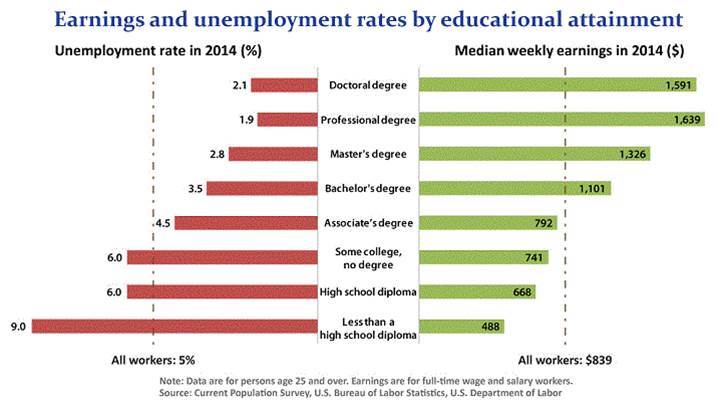
2015-04-21-1429642706-910082-educatedgeneration.pngThe good news is that whether you attend a public or private school, attending--and most importantly -- graduating from college remains a smart choice. Overall, college graduates earn considerably more than those with a high school diploma, and have muchlower rates of unemployment throughout the economic cycle. And according to a recentstudy by the Pew Research Center, Millennials could become the most highly educated generation to date - with twice as many female college graduates compared with their grandmothers (known as the "silent" generation).

So let's break down the decision into four parts - the school, the package, and you -- with extras for those still seeking options.
Choice of School: If you have a "short list" of colleges that have accepted you, ask what attracted you to each one? Was it a "safe" school, a "party" school, or close to (far from) home? What percentage of freshmen drop out and how many finish in 4 years or even 6? What are the housing options and alternatives if they don't work? How secure is the campus for students in general and women in particular? Does the school help students find internships, outside programs and jobs?
Let's talk money. Forget the headline cost of tuition - look at the aid package offered to you - also called the "net price". The Consumer Financial Protection Bureau (CFPB) has standard "shopping sheet" that breaks down costs clearly and explains basic terms - nearly 3,000 colleges and universities have adopted it since 2012. They also have an online comparison tool that helps families evaluate a few schools at once. And the outcome might surprise you. For public schools, the CUNY (City Universities of New York) system has some of the lowest "net prices" in the New York metro area and the country; at the other end of the scale, Stanford University recently announcedthat students from families earning below $125,000 generally won't pay tuition at all (this doesn't include room and board).
2015-04-22-1429668296-81728-WeeklyEarningsbyEducation_BLS2014.jpg
Chart Source: Bureau of Labor Statistics
What about you? Do you believe you'll get into the program or major you want? Are you an artist looking at colleges majoring in Big 10 sports and Greek life? Does the campus have people who look like you and are there activities that reflect your culture? Will you be OK with the weather and does the surrounding area interest you? And how will this school or university help you graduate in a timely manner if you change majors?
If you're still happy with your original choice - congratulations! Now you can focus on finishing your senior year with solid grades and start the roommate selection process.
Other options: Still dissatisfied? Get ready to act immediately after "D" day. The National Association for College Admission Counseling (NACAC) releases a Space Available list right after May 1st and updates it regularly through mid-June. This list will mention whether a school has seats available for incoming freshmen, and whether financial aid and housing is still available. You must act quickly and know you're starting from scratch; schools will likely make a decision within six weeks.
But buyer beware - during this period colleges may focus on students who fill specific holes in their roster - students who apply for a less popular major, or accept diehard future engineers or business students to fill spots in those departments. They may also accept students who require less financial need or those willing to attend but not in their first choice of major. If you truly want to attend a specific school, speak up and let the admissions office know you really want one of those slots.
If none of the above works, community college might be the best bet while you improve skills, get focused, or go for a two-year Associates degree. If you plan to apply to another college afterward, explore whether those credits are transferable generally, or only to in-state schools. Failure to do this research can be as costly as choosing the wrong four-year school.
Yes, even for those on the cusp of adulthood and ready for freedom, that annoying question still rings true: have you done your homework? The choice is yours.

Tuesday, March 3, 2015

College Admissions: 5 Ways To Survive College Decision Season

Reposted from: http://www.golocalprov.com/lifestyle/college-admissions-5-ways-to-survive-college-decision-season

March decision season is about to commence for seniors. Each day, students will stalk the mailman, check their in-boxes a dozen times and log into admissions portals hoping for answers. The result is stress, drama and in some cases, jealousy among teens and parents. To help you survive the roller coaster, here are a few common sense things to remember:

Rejection is part of life.

While none of us want to see a child rejected, it is part of the admissions process. Very few students will get into all of their colleges. As teens enter adulthood, learning about rejection is part of the maturity process. In the future, they will face job rejections, broken hearts and other disappointments. As parents, this is your chance to teach them about accepting defeat with strength and grace.

Jealousy is not pretty.

As much as it might hurt when a peer gets into YOUR first choice college while you are rejected, you need to be happy for him/her. Senior year is not the time to ruin friendships that you have nurtured since grade school over something you cannot control. So, smile, congratulate your friend and move on to exploring your options.

Life is not fair.

There will always be someone in life who won an award, got a job or was accepted to a college with seemingly fewer credentials than you. Accept that you don’t know the whole story. Sometimes people lie about grades or test scores. They may have written a killer essay or knocked the socks off an interviewer. He or she may also have an aunt, uncle or cousin who is on the board of trustees or in admissions at the college—you REALLY don’t know!

Keep an open mind.

If you are not accepted to one of your top choice colleges, it could be the best thing that ever happened to you. There are countless stories of highly successful individuals who were rejected from their top choice school only to flourish where they matriculated. So, revisit campuses where you were accepted, research the opportunities at each school, and don’t make a rash decision. Take your time and perform due diligence.

Triumph with grace.

Although it is tempting to go running down the hall screaming, Tweet or text everyone you know when you get a great acceptance---temper your enthusiasm. Remember that someone else you know was also hoping for an acceptance and may not have gotten it. So, go home and scream, celebrate with your family and boast to your grandparents, but keep it contained and be considerate of others’ feelings.
Cristiana Quinn, M.Ed. is the founder of College Admission Advisors, LLC which provides strategic, college counseling and athletic recruiting services for students.www.collegeadvisorsonline.com.

Tuesday, September 23, 2014

Dealing with Junior Year Stress

junior year stress
From: https://www.teenlife.com/blogs/articles/dealing-junior-year-stress
The reputation of how demanding junior year of high school is can make teens fearful—with good reason. It is an important and busy year for students. But it does not have to be an overly stressful year with proper planning and the right attitude.
How can parents help their teen deal with junior year stress?

Junior Year is Busy

Students have to juggle a lot in their junior year. Heavy course loads, standardized testing, and extracurricular activities (not to mention trying to have a social life) can make it difficult for teens to balance everything on their plate.
A slow academic start freshman or sophomore year is not usually cause for concern but a dip in junior year performance can be an issue, especially if a teen is applying early decision or early action to college. Colleges are looking for upward trends in grades and evidence that students are willing to stretch intellectually and academically in core subjects.
Brittany Maschal, Ed.D, Educational Consultant, says, “Considering the importance of junior year grades, and the likelihood that a student’s course load is heavier than ever before, the amount of time spent studying to maintain or even raise a GPA can be cumbersome.” In addition to their school classes, teens also have to prepare for standardized tests, which means even more time hitting the books.
If academic obligations weren’t enough, most students are heavily involved in activities outside of the classroom. When it comes to extracurricular activities, there is no magic resume that will guarantee admission to a student’s first choice college.
Christine K. VanDeVelde, co-author of the book College Admission: From Application to Acceptance, says, “Sitting around playing video games will not be looked upon kindly—unless you're designing video games. Colleges are looking at what students do outside the classroom to understand who they are, but also to understand what they will contribute to the community once they're on campus. Also by junior year students should probably be thinking about taking on leadership roles in at least one activity that is important to them.”

Starting the College Selection Process

If present day commitments weren’t enough to deal with, juniors also need to start thinking about the future and doing college research. VanDeVeldeexplains, “Teens have to take a four-digit universe—2,242 colleges and universities—and turn it into a two-digit list of possibilities: the preliminary list of the dozen or more schools they think they might like to attend. It's no small task and it's vital that students not approach it casually.”
VanDeVelde cautions that students can get so busy with junior year obligations that often they don’t put in the time to really investigate colleges. By the end of junior year/beginning of senior year, teens should have a list of six to ten colleges they are interested in. DeVelde explains. “Colleges will be looking to see if a student is a genuine fit with their school. But if students have not adequately researched that list, they won't know each school well enough to know whether they really like it or to be able to articulate in their application why they're a good fit.”

A Tendency to Overextend

The key to having a manageable junior year is planning and organization. Maschal says, “Junior year is a busy one but it doesn’t have to be too stressful. Planning ahead and knowing that the college process is a marathon, not a sprint, can save both students and their parents a lot of time and energy along the way.”
One of the biggest mistakes teens make junior year is overextending. Maschal tells her clients, “You can not do all things and do them all well. Focus on academics first and your top two or three extracurricular activities. Do not add on clubs to pad your resume or skip giving yourself time to just relax.”

The Need to Be Independent

Teens have so much going on junior year, it is natural for parents to want to step in and help them. But as much as parents may want to take control of certain aspects of the college process, it really is up to the teen to lead the search.
Kate Roberts, Ph.D. advises, “At this age, teens want to create more independence from their parents and may have a hard time asking for help because they want to feel and appear independent.” They may also worry about disappointing their parents—not getting good enough grades, not getting in to a parents alma mater, etc.
Parents get stressed too. Roberts says, “They want to give their teens space to be independent but they don’t want them to fail so sometimes they overstep. It is difficult for parents to allow their child to fail and recognize it is part of the learning experience.”

How Parents Can Help

The main role of parents of juniors is to be a support system. VanDeVelde explains, “Parents should set the stage for an ongoing discussion of grades, activities and college applications, but they should not attempt to control the agenda. In other words, follow the student's lead.”
Be positive and encouraging but also realistic. Focus less on results and instead praise effort. Remind teens not to overextend themselves and to stay healthy by eating well and getting enough sleep. Help teens to realize that they need their best without stressing or worrying about the things they cannot control. Roberts reminds parents, “A person’s life is not defined by their high school success. It's defined by the way they approach tasks and their character development.”